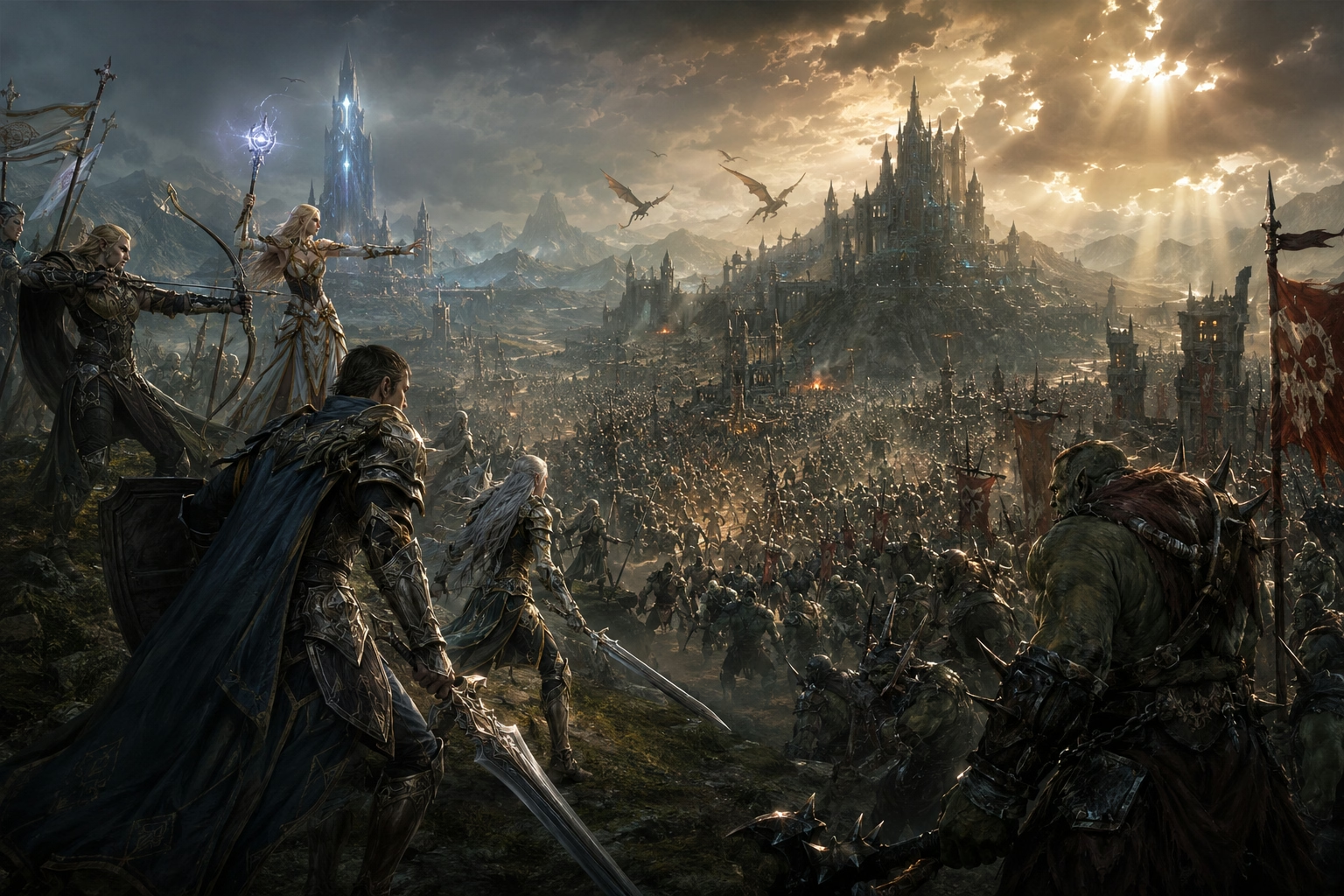
The thirteenth chapter of the Lineage 2 storyline focuses on one of the most significant turning points in the game's history—the collapse of the Orc Kingdom and the emergence of humanity as a dominant force on the continent. It also explains the origins of the Proud Orcs, the mysterious Ragna tribe, and the lasting consequences of the alliance between elves and humans.
Elves Teach Humanity the Art of Magic
After losing much of the continent and finding themselves abandoned by the other races, the elves were left alone to fight the expanding Orc Kingdom. Desperate for allies, they accepted humanity's offer of assistance and began teaching humans the secrets of magic on Talking Island.
The results came quickly. Human armies rapidly grew into a formidable military force, giving the alliance a much-needed advantage against the orcs.
The Orc Assault on Talking Island
Determined to stop the education of humans, the orcs dispatched the Tunat tribe—known in some Korean sources as the Rinunt tribe—to destroy the School of Magic on Talking Island.
The timeline surrounding this event has long been debated. Some in-game quests place the invasion approximately 500 years before the start of the game, during the wars with Elmore. However, this creates several inconsistencies, as the School of Magic had already been abandoned and the orcs were never known to have advanced that far.
Considering numerous timeline contradictions throughout Lineage 2 lore, it is far more likely that this invasion occurred roughly 500 years before the founding of the Empire, during the original Elf-Orc War.
The combined armies of humans and elves ultimately forced the invading orcs to retreat, leaving the Tunat tribe isolated on Talking Island where it gradually declined over the centuries.
Humanity Begins Driving the Orcs Back
After securing the island, the allied forces landed on the mainland and defeated the Turek Orcs, pushing them away from the southern coastline.
As the war continued, the orcs retreated northward, constructing strongholds across the lands of Rune. Historical texts such as the Book of Hero Tales suggest that these fortifications eventually became the foundations of the region's later cities and castles.
One of the bloodiest battles occurred in the region once known as Iliga, later called Elmore. During the conflict, immense magical power transformed the battlefield into a poisoned wasteland that would eventually become the Swamp of Screams.
From this point onward, the alliance steadily gained the upper hand.
Division Within the Orc Kingdom
Military defeats were accompanied by growing political unrest among the orcs.
Additional lore introduced in Lineage 2M tells the story of Redford, leader of the Red Wolves tribe. After another orc tribe betrayed the location of her camp, allied human and elven forces massacred her people. Consumed by revenge, she vowed to destroy both the traitorous tribe and the alliance responsible for the attack.
Meanwhile, many noble orcs realized the kingdom could no longer sustain the war. They favored negotiating a temporary peace to preserve what remained of their civilization.
Others refused any compromise, believing it was better to die in battle than surrender.
The internal conflict weakened the kingdom even further, eventually bringing the once-great Orc Kingdom to its end.
Humanity Surpasses the Elves
Unable to defeat the elves through open warfare, the orcs resorted to sending the assassin Avizar to eliminate key elven leaders.
At roughly the same time, the dwarves abandoned the orc alliance and began supplying weapons and armor to humanity.
According to the Book of Hero Tales, this decision marked the beginning of the long-standing rivalry between dwarves and elves.
Equipped with superior dwarven equipment, human armies no longer depended on elven legions to defeat the orcs.
Ironically, the elves began to fear the consequences of their own actions. The race they had once considered weak and insignificant had grown into a powerful military force that no longer relied on its former teachers.
Although the elves sensed the danger, they never imagined that humanity might eventually become their greatest rival.
The End of the War
The alliance ultimately achieved complete victory.
The orcs signed a humiliating peace treaty and withdrew to the Plateau of Immortality, also known as the Black Forest.
According to legend, the Orc Chief laughed as his people retreated:
"Foolish elves. This is not your victory—it belongs to those filthy humans. How do you intend to control the monster you have created?"
His words proved prophetic, foreshadowing the future conflicts between humans and elves.
The Birth of the Proud Orcs
Not every orc accepted the peace treaty.
A number of tribes rejected surrender entirely, believing that dying in battle was more honorable than living under humiliation.
These warriors became known as the Proud Orcs (Superbia), distinguishing themselves from the Noble Orcs who accepted peace for the sake of rebuilding their kingdom.
The Proud Orcs declared war on their own people and were eventually banished from the Plateau of Immortality as traitors.
Among the exiled tribes were:
Ragna — The Mysterious
Morik — The Brave
Amdan — The Untamed
Turka — The Merciless
Older Lineage 2 sources often confused the names Ragna and Lagra, but modern Korean lore has largely standardized them as the same tribe.
The Legend of Ragna
Lineage 2M expands upon the origins of the Ragna tribe's leader.
As an infant, he was discovered outside the home of the Orc Chief Histui. When the child first opened his eyes, they glowed the color of Paagrio's flame—an unprecedented omen among the orcs.
He was named Ragna, meaning "Red Eyes" in the orcish language.
Although gifted with extraordinary talent, many feared that he threatened the authority of the Lord of Flame. Eventually, he left his people behind.
When the final battle came, Ragna and the Proud Orc tribes ignored orders to retreat and chose to defend their city against the overwhelming elven army.
The elves, now fighting from a position of overwhelming strength, destroyed the city completely and attempted to eliminate every surviving inhabitant.
The Hidden Ruins of the Proud Orcs
Although the destroyed city is never directly named, multiple lore sources strongly suggest that its ruins still exist within the game.
The location known as Den of Evil is described as the remains of an ancient orc city once inhabited by the exiled Ragna tribe.
Some survivors escaped only because the dwarves of the Silver Scale Guild secretly rescued them. These orcs later served the dwarves as guardians of their growing underground empire.
To the remaining orcs, however, they became permanent outcasts, and the Ragna tribe was eventually erased from the official list of Noble Orc clans.
The Crypts of Disgrace
Unable to bury their dead on the Plateau of Immortality, the exiled orcs constructed a massive burial complex for their fallen leaders.
The Noble Orcs later named it the Crypts of Disgrace.
Despite the insulting title, the tomb itself reflects the immense importance of those buried within. It is one of the largest and most impressive orcish monuments ever created.
Legend claims that because these warriors were denied burial in their ancestral homeland, many rose again as undead, forever haunting the crypt.
Histui's Eternal Vigil
Unlike the exiles, the leaders of the Noble Orcs were laid to rest in the Cave of Trials, the sacred place where the first orc was said to have been created.
According to official guidebooks, Chief Histui, who led the orcs during the war against the human-elven alliance, was buried there. His spirit is said to remain within the cave, eternally protecting the sacred resting place of his people.
The fall of the Orc Kingdom reshaped the political landscape of Lineage 2 forever. Humanity emerged as the continent's new military power, the elves unknowingly created a future rival, and the Proud Orcs became a lasting symbol of honor, rebellion, and sacrifice. Their legacy survives through forgotten ruins, haunted crypts, and the enduring legends of the Ragna tribe.