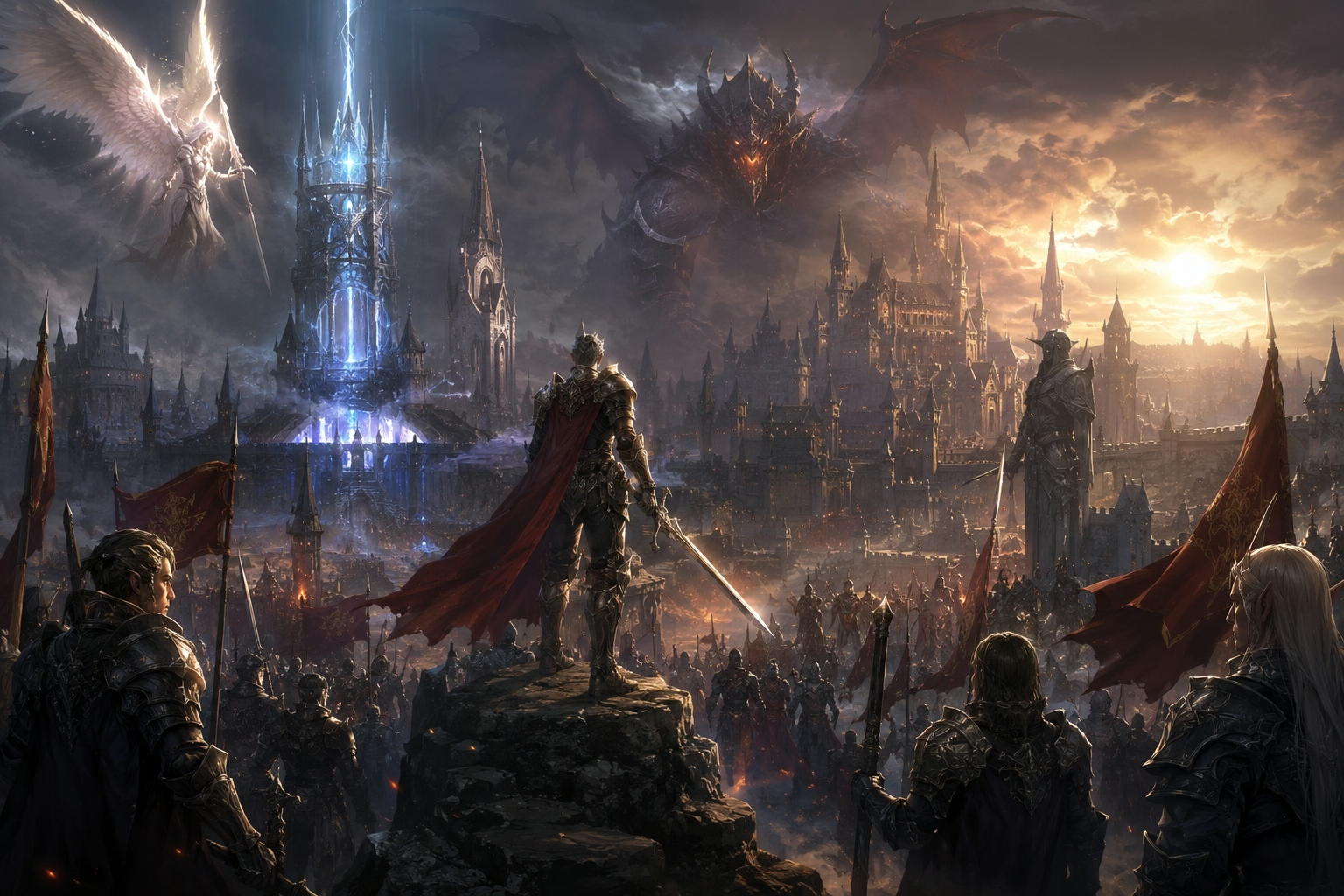
When players look back at the history of Lineage 2, most remember the groundbreaking C4 update or the legendary Interlude. Yet between these iconic releases came Chronicle 5: Blood Oath, an expansion that quietly introduced some of the game's most influential systems while laying the foundation for its future.
Released on June 1, 2006 for Korean servers and later that year for western audiences, Blood Oath arrived during a difficult period. Although Lineage 2 remained incredibly popular in regions like the CIS, official subscription numbers were declining worldwide as new MMORPGs—especially World of Warcraft—attracted more players. C5 was NCsoft's answer to these challenges, delivering major gameplay improvements, class balancing, social features, and an enormous amount of new content.
The State of Lineage 2 Before C5
Chronicle 4 had already transformed Lineage 2 with the introduction of:
Third class transfers
Hero system
S-grade equipment
Epic jewelry
Expanded endgame content
However, these additions also widened the gap between veteran players and newcomers. Powerful clans controlled castles and epic bosses, while new players found it increasingly difficult to catch up.
Blood Oath sought to preserve the game's hardcore identity while making progression more accessible for casual players and newcomers.
Expanding the World of Elmoreden
One of C5's biggest achievements was finally completing the world map by connecting previously isolated regions.
The Monastery of Silence
One of the most memorable additions was the Monastery of Silence, hidden in Rune Territory. This enormous monastery combined peaceful lower halls inhabited by monks with magnificent upper chambers protected by angels.
The area featured several unique mechanics. Characters could move freely through much of the monastery while unarmed, but equipping a weapon immediately angered the monks, who would attack intruders. Creative players eventually found ways to exploit this mechanic for efficient farming.
At the monastery's center was the mysterious Holy Grail, guarded by the raid boss Anais, whose ability to detect invisible players made the encounter especially challenging.
Pagan Temple
Located beneath the city of Rune, the Pagan Temple served as a secret sanctuary dedicated to the demon king Triol.
Its hidden location, dark atmosphere, and quest-based access made it one of the most mysterious locations ever introduced into Lineage 2.
Stakato Nest
East of the Swamp of Screams, players discovered the Stakato Nest, an enormous insect colony populated by monsters around level 72 and ruled by Queen Shyeed.
Its distinctive environment offered one of the game's most atmospheric high-level hunting grounds.
Schuttgart Arrives
C5 also introduced the northern city of Schuttgart along with six surrounding hunting zones designed for characters between levels 20 and 63.
These included:
Crypts of Shame
Plunderous Plains
Lair of Evil
Pavel Ruins
Ancient Laboratory
Ice Labyrinth
Among these, the Pavel Ruins and Ancient Laboratory became especially popular thanks to their engaging lore surrounding giant technology and the mad scientist Doctor Chaos.
Meanwhile, the Ice Labyrinth became one of the game's favorite leveling locations, later tying into the story of Freya several updates afterward.
The First Steps Toward Instance Raids
Blood Oath introduced something entirely new to Lineage 2: private raid zones.
Sirra's Castle
Players could enter the Snow Queen's Castle through a special NPC, creating one of the game's earliest raid instances. Unlike traditional open-world raid bosses, groups fought inside a protected environment with a time limit.
Although primitive compared to modern MMORPG instances, this system represented a major design shift for Lineage 2.
Frintezza — The New Epic Boss
The headline feature of C5 was undoubtedly Frintezza, son of Baium and the final emperor of Elmoreden.
The encounter was unlike anything players had experienced before. Multiple command channel parties had to coordinate across several battle phases, making it one of the game's most complex raids.
Initially, Frintezza proved so difficult that many players considered the encounter impossible. NCsoft later adjusted several mechanics and reduced the boss's overall difficulty.
Despite Frintezza's importance, much of his story remained a mystery until later expansions expanded his lore.
Rune Castle and Benom
Blood Oath introduced the castles of Rune and Schuttgart, but Rune stood out thanks to its spectacular architecture and unique siege mechanics.
Castle owners gained access to the raid boss Benom, who appeared beneath the castle. If left undefeated before the siege, Benom would invade the throne room during battle as an almost unstoppable force, attacking both defenders and attackers alike.
This mechanic created one of the most memorable castle siege events in the game's history.
Zariche — The Cursed Demon Sword
One of C5's most innovative additions was the cursed weapon Zariche.
Dropped randomly from monsters, the sword transformed its owner into a chaotic force of destruction.
While wielding Zariche:
Players could not form parties.
Healing was disabled.
The weapon could not be removed.
Every kill increased its power.
Other players hunted its owner relentlessly.
Eventually, the sword disappeared automatically, making every appearance a server-wide event.
Class Balance and New Skills
Blood Oath significantly rebalanced gameplay by improving physical classes and introducing dozens of new abilities.
Among the additions were:
Tribunal
Justice
Arrest
Angelic Icon
Stealth
Lethal Injection
Rapid Fire
Dead Eye
Hawk Spirit
Fanatic
Infernal Form
Mana Storm
Purity
Mass Fear
Cancel mechanics were also adjusted, Ultimate Defense received resistance improvements, and many debuff calculations were redesigned.
Overall, physical damage dealers became considerably more competitive.
Herbs and Solo-Friendly Gameplay
To help new players, C5 introduced Herbs, temporary consumables dropped by monsters that instantly restored HP, MP, or granted buffs.
Combined with faster health regeneration for low-level characters, leveling became significantly smoother without completely abandoning Lineage 2's challenging nature.
These changes represented NCsoft's attempt to make solo play more enjoyable while still encouraging players to eventually join groups and clans.
The Academy System
Perhaps the most important social feature of Blood Oath was the introduction of the Clan Academy.
Level 5 clans could recruit players below level 40 into an academy, allowing newcomers to:
Participate in clan chat
Learn from experienced members
Receive equipment rewards
Build relationships before joining the main clan
Once players graduated, they automatically left the academy and could decide whether to join permanently.
This elegant system helped integrate new players into the community without placing immediate obligations on either side.
A Complete Clan Overhaul
Blood Oath greatly expanded clan mechanics by:
Increasing the maximum clan level from 5 to 8
Introducing structured clan divisions
Adding new clan skills
Requiring raid boss items for clan progression
Improving internal organization
The expansion reinforced the importance of teamwork while modernizing how clans functioned.
Numerous Quality-of-Life Improvements
C5 also introduced many smaller improvements that players quickly embraced:
Three-line hotbar
Improved party search
Visible clan information during trades
+6 armor set bonuses
Removal of item drops after dying to monsters
Extended raid loot protection timers
These changes made everyday gameplay smoother while preventing several forms of exploitation.
The Antharas Incident That Changed Raid Loot Forever
One of Blood Oath's lesser-known changes originated from a famous scandal on Korean servers.
After a five-hour Antharas raid involving hundreds of players, two individuals exploited the loot system and stole equipment reportedly worth thousands of dollars by leaving the command channel moments before the boss died.
The controversy led to legal action and widespread community outrage.
As a result, NCsoft redesigned raid loot mechanics in C5, preventing outsiders from immediately looting boss rewards.
The Battle Against Private Servers
While official subscription numbers continued to decline globally, Lineage 2 experienced explosive popularity on private servers, particularly in the CIS region.
NCsoft responded by increasing legal action against pirate servers, including the shutdown of the well-known L2Extreme project in the United States.
Ironically, many players experienced Lineage 2 exclusively through private servers, causing C5 to receive far less attention than it deserved.
Why Blood Oath Deserves More Recognition
Chronicle 5 introduced an astonishing amount of content:
New cities and hunting zones
Frintezza
Rune Castle
Clan Academy
Expanded clan system
Class balancing
Solo-friendly mechanics
Herbs
Zariche
Instance-style raids
Numerous quality-of-life improvements
Many features often associated with Interlude actually debuted in Blood Oath. Yet because many private servers skipped C5 entirely, it became overshadowed by both Chronicle 4 and the immensely popular Interlude.
Today, Blood Oath stands as one of the most significant—and most underrated—updates in the history of Lineage 2, successfully preserving the game's hardcore identity while making it more accessible to future generations of players.