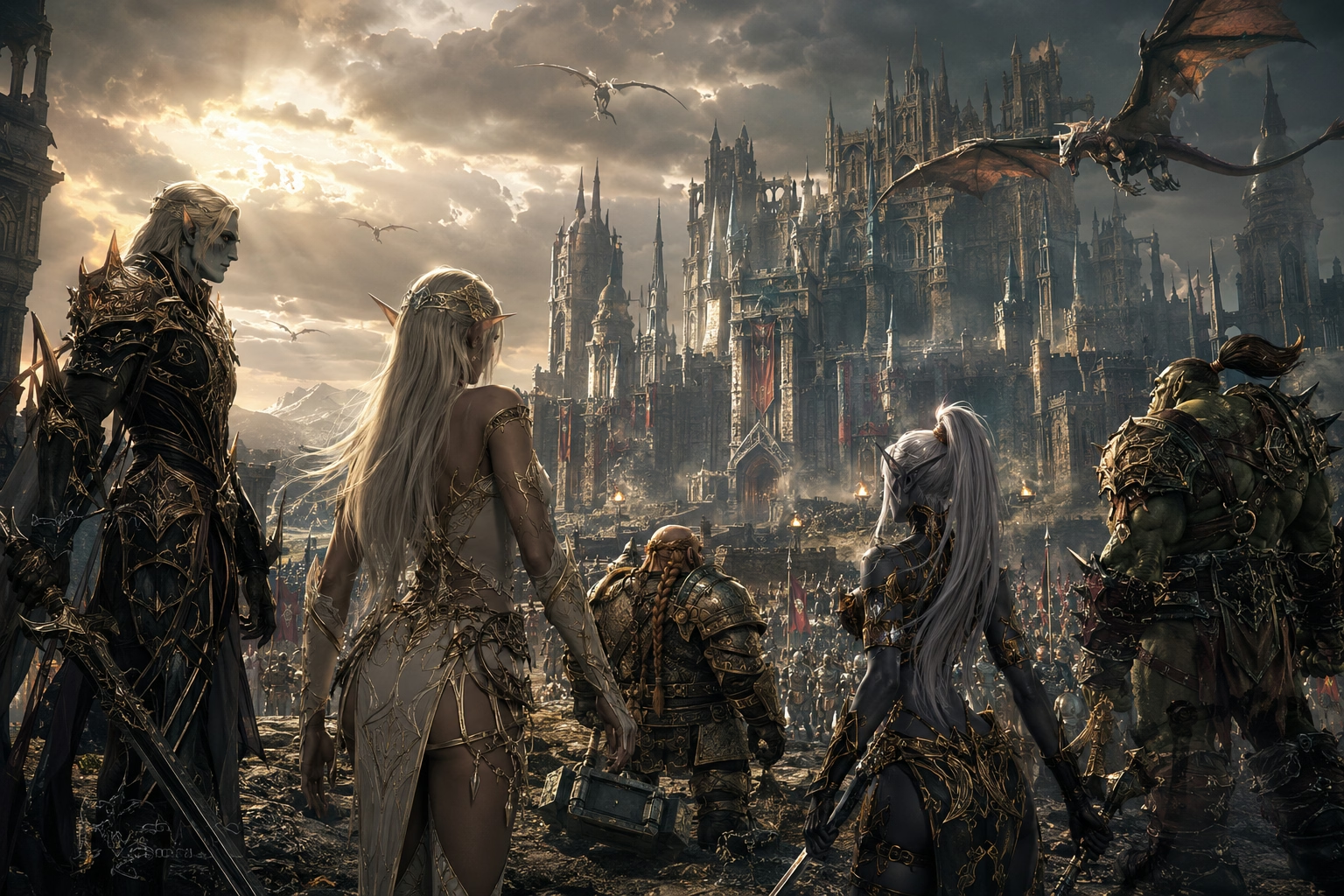
For years, many players have argued that Lineage 2 gradually moved away from the Dark Fantasy atmosphere that defined its early years. A rarely discussed developer interview published in a 2004 Japanese Lineage 2 artbook offers valuable insight into the game's original artistic vision, the inspirations behind its races, and the ambitious features that were planned during development.
The Origins of Lineage 2's Visual Style
According to the developers, Lineage 2 initially began as a traditional medieval fantasy project. However, after studying many European fantasy games that closely followed historical aesthetics, the team decided to create something more unique instead of simply copying existing styles.
Their goal was to combine medieval fantasy with their own artistic identity, resulting in the distinctive Dark Fantasy atmosphere that became one of the game's defining characteristics.
To achieve a more immersive world, the developers also accepted higher system requirements in exchange for advanced graphical features, including:
Dynamic lighting based on the sun's movement
Long viewing distances
Detailed character and monster models
Large castle structures that emphasized verticality during sieges
These improvements helped make the world feel far more realistic than many MMORPGs of its time.
Anime and Manga Were Major Inspirations
One of the biggest surprises from the interview is how heavily the development team drew inspiration from Japanese animation and manga.
Several developers shared their personal influences:
James Bae cited Mobile Suit Gundam and the works of manga artist Mitsuru Adachi.
Park No-Hoon named Castle in the Sky (Laputa) among his favorites and revealed that he had subscribed to the Japanese magazine Dengeki Daioh for several years.
Hwang Ho-Un, the visual art director responsible for Lineage 2's overall look, listed Mobile Suit Gundam 0083 as his favorite anime.
Jung Joon, illustrator of many early promotional artworks, also cited Mobile Suit Gundam as a major influence.
Although Lineage 2 is often associated with European fantasy, the interview shows that Japanese animation had a significant impact on its artistic direction.
Designing the Playable Races
The developers explained that every race was created around a specific visual theme established by both the planning and graphics teams.
Examples included:
Humans — realism and strength
Elves — elegance and nobility
Orcs — power
Dark Elves — mystery and otherworldliness
Dwarves — charm and personality
Illustrators were then given creative freedom while working within these guidelines.
Why Orcs Became Playable
The inclusion of Orcs was not originally guaranteed.
According to the interview, the production team strongly pushed for Orcs to become a playable race. Unlike the unintelligent monsters commonly seen in fantasy settings, Lineage 2's Orcs were designed as an honorable and intelligent civilization.
James Bae explained that their appearance was inspired by Tolkien's Orcs, combined with elements of shamanism and Native American aesthetics. This created a noble Orc culture distinct from the savage Orc monsters found throughout the game.
The Evolution of Elves and Dark Elves
The Elves were designed to represent elegance and aristocratic beauty.
Initially, female Elves had more realistic proportions, but the artists eventually made them slimmer to better distinguish them from Humans.
Dark Elves underwent several revisions as well. Originally, they did not have blue skin. The developers later adopted the blue complexion after being inspired by characters from Record of Lodoss War, believing it created a colder and more mysterious atmosphere.
The revealing armor worn by Dark Elves also served a deliberate artistic purpose. The developers believed that their unique skin color made the designs appear less provocative while emphasizing their supernatural nature.
Leather outfits inspired by bondage fashion were ultimately chosen, although the team admitted they had to work carefully to pass South Korea's content review standards at the time.
Why Female Dwarves Look So Different
Perhaps the most controversial design challenge involved the Dwarves.
Traditional fantasy often portrays female dwarves as older, bearded characters. The developers felt that few players would choose such a race, so they intentionally redesigned female Dwarves with youthful and adorable features.
This decision proved highly successful in Asian markets, where the race became extremely popular. In contrast, the interview notes that American players generally showed much less interest in Dwarves.
Creating Thousands of Armor Variations
Originally, the team intended to create one armor model that would simply scale to fit every race.
Instead, they decided that every armor set should have a unique appearance depending on which race wore it.
This dramatically increased the workload, requiring the creation of over 1,200 individual equipment models. Although the developers later admitted they sometimes regretted this decision, it became one of Lineage 2's defining visual strengths.
The Influence Behind Male Armor Designs
Some players questioned why certain male armor sets resembled skirts.
Illustrator Jung Joon explained that he was heavily influenced by Japanese artist Akihiko Yoshida, known for designing elegant male characters wearing unconventional fantasy clothing.
Although some developers initially opposed these designs, they were ultimately included in the game.
The Lore Was Inspired by Religious Texts
The interview also revealed that the writers drew inspiration from the Dead Sea Scrolls while building Lineage 2's mythology.
The story of the fallen angel Lucifer influenced the creation of Shilen, the goddess who became the mother of monsters.
Developers also discussed the upcoming Seven Signs storyline, explaining that it was inspired by the Book of Revelation and biblical themes surrounding the Apocalypse.
Players Rarely Paid Attention to the Story
Despite investing considerable effort into the game's lore, the developers admitted they were disappointed by how few players engaged with it.
Most players focused on castle sieges, equipment progression, and PvP rather than reading NPC dialogue or exploring the game's mythology.
The interview suggests this lack of interest may have contributed to later updates placing less emphasis on storytelling, even though lore was originally considered an important part of Lineage 2's identity.
Ambitious Features That Never Happened
The interview also revealed several ideas that never reached the final game, including:
Large-scale aerial battles using wyverns
Flying ships
Naval combat
Artificial intelligence capable of holding conversations with players and remembering previous interactions
Although these features were never implemented, they demonstrate how ambitious the developers' vision was during Lineage 2's early development.
Conclusion
The 2004 developer interview provides a fascinating look at the creative process behind one of MMORPG history's most iconic titles. It reveals that Lineage 2's identity was shaped by a blend of European medieval fantasy, Japanese anime and manga, religious symbolism, and a strong desire to create a world unlike any other.
Many of the game's most recognizable features—from its playable races and armor designs to its Dark Fantasy atmosphere—were the result of deliberate artistic decisions that continue to influence how players remember Lineage 2 today.