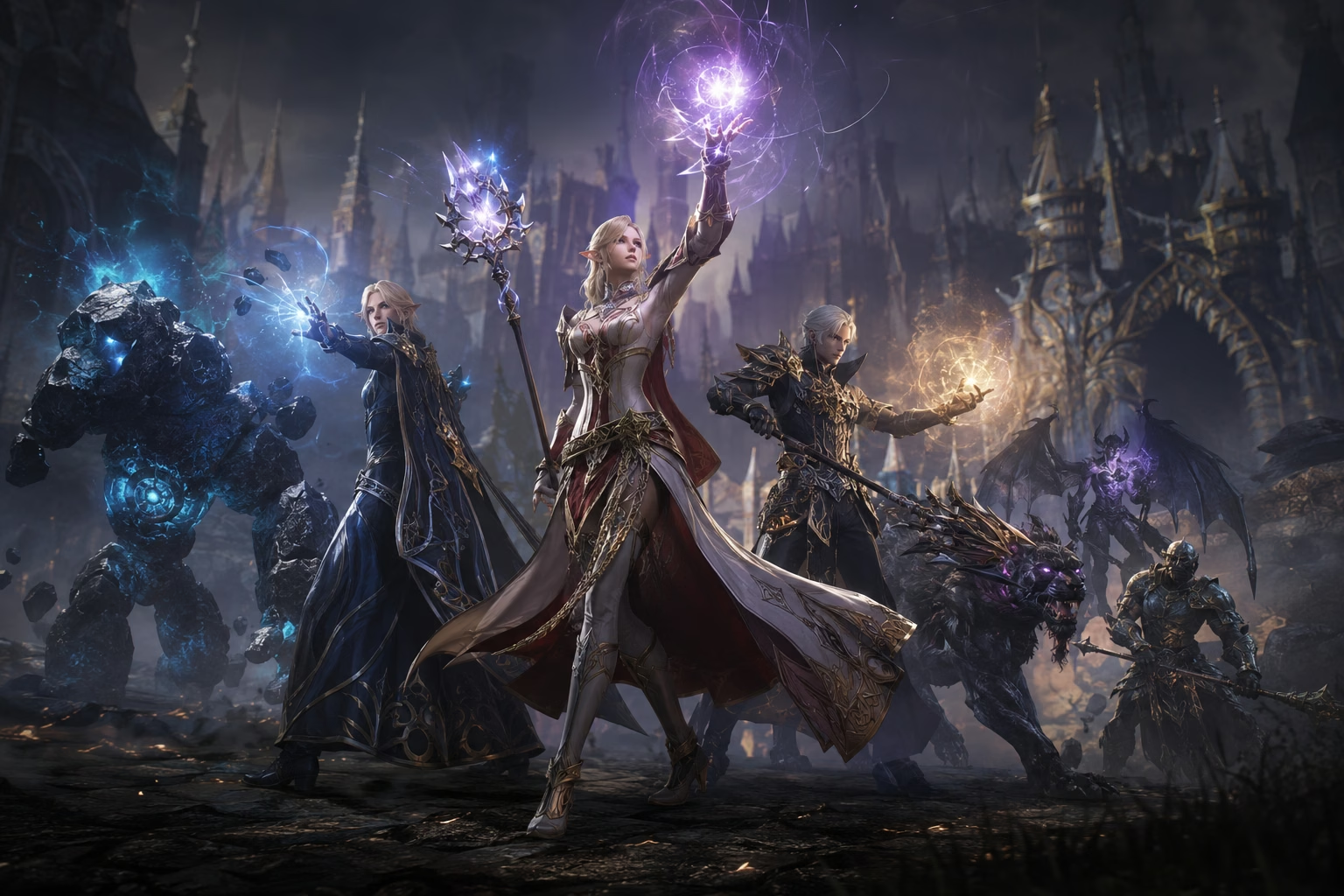
With the launch of another C1-to-C5 progression journey on Elmorlab, many players are revisiting the earliest version of Lineage 2. While tanks, archers, and daggers have already been discussed extensively, mages and summoners deserve special attention due to how different they were compared to later chronicles.
The Unique Nature of C1 Mages
Although mages remained powerful in C1, they were far less dominant than in later updates.
Several features that players now consider essential simply did not exist:
No tattoos.
No Special Ability (SA) weapons.
No Acumen potions.
No B-grade set bonuses.
No CP bar.
No Bright Mind passive MP regeneration.
Slower casting speeds across the board.
Because spell casting was slower and interruptions were common, many melee and ranged classes had more opportunities to challenge mages in PvP. Mana management was also a constant struggle, making support classes extremely important for high-level play.
Another major difference was Surrender skills. Their casting range was only 600 instead of the familiar 900, and they cast much slower, making them significantly less practical in combat.
Shield Mechanics
One of the most important PvP mechanics in C1 was shield blocking. Mages using a one-handed weapon and shield could dramatically improve survivability. Under proper buffs, shields could completely absorb incoming arrow attacks, making defensive setups far more valuable than the two-handed staff builds commonly seen in later chronicles.
Necromancer
The Necromancer was a versatile but demanding class.
Strengths
Strong debuff toolkit.
Transfer Pain for improved survivability.
Long-duration Sleep and Paralysis.
Fear effects in PvE.
Powerful anti-robe damage potential.
Weaknesses
Summons consumed 30% of earned experience.
Summons required crystals and constant re-summoning.
Cursed Bone was difficult and expensive to obtain.
Slow movement speed.
Darkness resistance became available early through support classes.
Unlike later versions, Necromancers in C1 could not rely heavily on summons for leveling. The class required experience and planning but rewarded skilled players with excellent crowd control and survivability.
Sorcerer
The Sorcerer excelled in group leveling and AoE farming.
Strengths
Early access to Blazing Circle.
Multiple AoE spells.
Concentration skill for reduced spell interruptions.
Effective poison and damage-over-time combinations.
Powerful Cancel skill.
Weaknesses
AoE farming spots were less convenient than in later updates.
Missing several iconic skills that arrived in future chronicles.
The Sorcerer was one of the most comfortable PvE classes in C1 and remained highly effective in PvP thanks to Sleep, Cancel, and strong area damage.
Spellhowler
Spellhowler offered the highest magical damage output.
Strengths
Exceptional burst damage.
Excellent solo leveling potential.
Strong debuffs and self-sustain options.
Ability to exploit wind-vulnerable monsters.
Weaknesses
Slowest casting speed among mages.
Vulnerable to interrupted casts.
No Cancel skill.
Wind resistance buffs were common.
Spellhowler players could often eliminate monsters with fewer spells than other mage classes, making leveling efficient despite the class’s slower gameplay.
Spellsinger
Spellsinger was arguably the strongest PvP mage in C1.
Strengths
Fastest casting speed.
Highly effective Sleep.
Powerful Cancel.
Strong control in one-on-one combat.
Aura Flare remained highly effective in PvP.
Weaknesses
Lowest damage output among mages.
Weak PvE performance.
High mana consumption.
Limited AoE capabilities.
While leveling a Spellsinger could be challenging, the class became a nightmare for opponents in PvP due to its ability to disable enemies and strip all buffs with Cancel.
Summoners in C1
Summoners were among the most self-sufficient classes in the game, but they played very differently from their later versions.
Key C1 Limitations
No Beast Shots or Spiritshots for pets.
Summons consumed 30% of experience.
Summons lasted only 20 minutes.
Summoning required crystals.
No advanced third-class summons.
Limited party usefulness.
While inexpensive to gear and capable of solo progression, summoners struggled to secure party spots and contributed little in large-scale PvP.
Warlock
The Warlock was arguably the most interesting summoner in C1.
Advantages
Strong Curse of Weakness debuff.
Cat summon capable of restoring MP.
Movement-speed buffs for summons.
Easier early leveling due to Human Wizard fire magic.
The MP-restoring cat provided significant quality-of-life advantages during long grinding sessions.
Elemental Summoner
The Elemental Summoner shared several strengths with the Warlock but lacked many of the features that made the class famous in later updates.
Advantages
Curse of Weakness.
Unicorn capable of restoring MP.
Drawbacks
No Merrow.
No Seraphim.
Little value in parties.
Weak PvP impact.
Without its iconic future summons, the class felt far less influential than players may remember.
Phantom Summoner
The Phantom Summoner was the most controversial of the summoner classes.
Advantages
Strong offensive summon.
Potentially efficient solo leveling.
Drawbacks
Low Constitution.
Slow casting speed.
No MP-restoring summon.
Limited PvP effectiveness.
Mana management was a constant issue, making prolonged grinding sessions more difficult than for other summoners.
Final Thoughts
Mages in C1 remained powerful but required significantly more support, planning, and resource management than in later Lineage 2 chronicles. Slower casting speeds, limited equipment bonuses, and the absence of many iconic skills created a far more balanced environment.
Summoners, meanwhile, were affordable and effective solo classes but lacked the party utility and PvP impact they would gain in future updates.
For players preparing to experience the original C1 environment, understanding these differences is essential. Many classes that became dominant in later chronicles played very differently during the earliest era of Lineage 2, making C1 a unique and challenging chapter in the game's history.