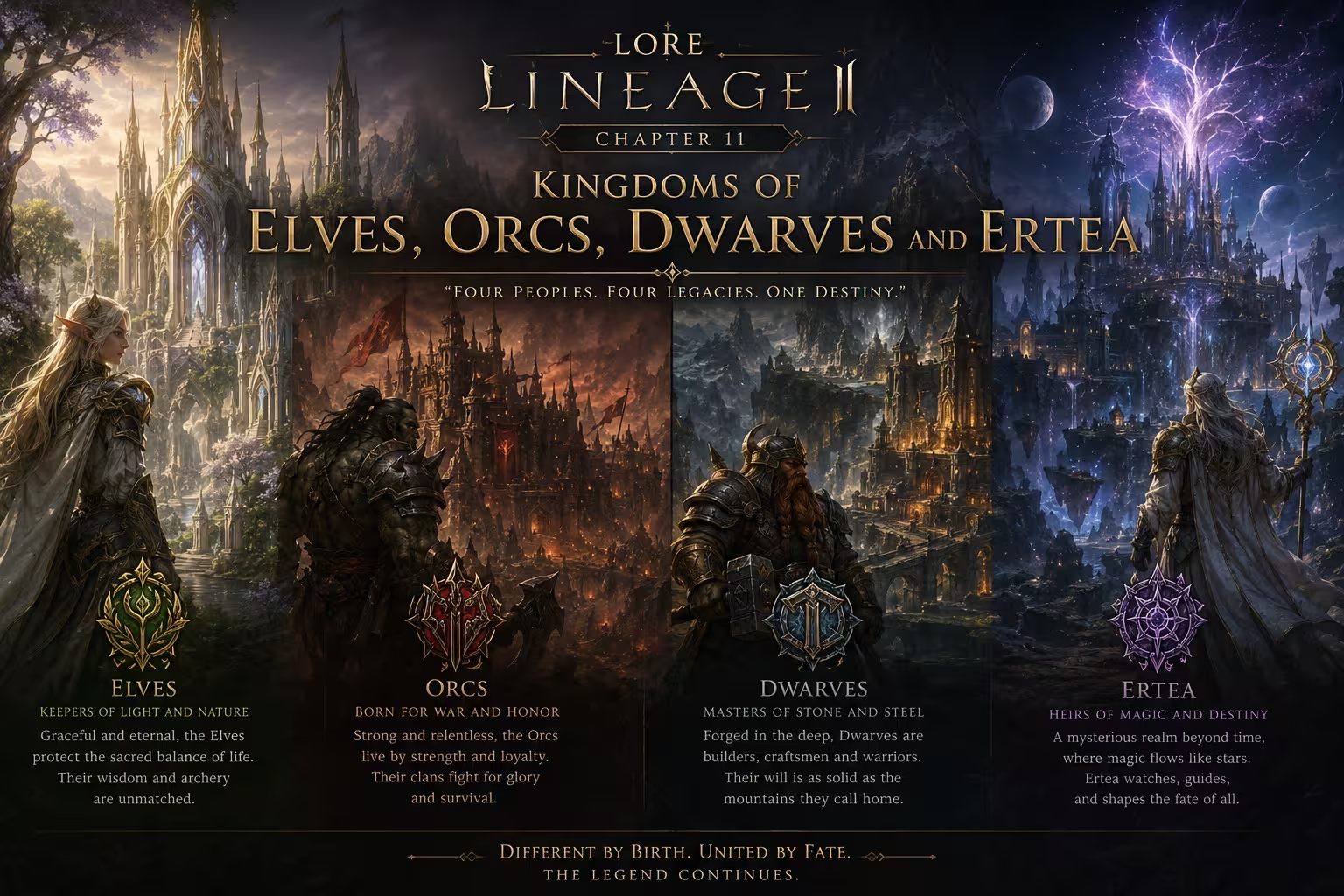
After the Fall of the Giants
The destruction of the Giants marked one of the most significant turning points in the history of the world. After challenging the gods, the Giants were annihilated by the angels of Einhasad, and their great cities and advanced civilization were reduced to ruins. The few survivors were sealed away on the Immortal Plateau by Gran Kain, while those left behind gradually fell under the control of the artificial intelligence they had created.
The aftermath was catastrophic. Countless plants and animals disappeared, magnificent cities vanished, and the surviving races were forced to fight for survival in a shattered world. This event would later be remembered as the Great Calamity.
Deeply affected by the devastation, the goddess Eva wept for the world. According to legend, her tears formed the lake later known as Rainbow Lake.
The Birth of the Elven Kingdom
With the sudden disappearance of the Giants, the races of Elves, Orcs, Ertheia, Dwarves, and Humans gained their freedom. However, they also inherited the responsibility of rebuilding civilization without guidance from either the Giants or the gods.
In 586 BC, approximately 2,075 years before the events of Lineage II, the Elves succeeded in uniting the races and established rule over the continent. Their nation, known as the Forest Kingdom, was governed by Queen Beora and a Council of Twelve Elders chosen by the Mother Tree.
Under Beora's leadership, the Elven Kingdom entered a golden age of prosperity. Elven culture flourished through architecture, craftsmanship, magic, and diplomacy. Historical records describe Beora as a generous ruler who frequently shared treasured Elven artifacts with other races.
Elven Beliefs and Culture
Nature stood at the center of Elven society. However, Elven religious beliefs were not entirely unified.
Some Elves remained loyal to Shilen, the original creator goddess who later became the Goddess of Death. Others embraced Eva as the new protector of water and nature. Many traditions also included worship of the Tree of Life.
The White Elves followed a more spiritual and shamanistic path, revering spirits and maintaining ancient sacred sites dedicated to the Spirit Kings.
Elven magic developed through ancient pacts with nature spirits. Their connection with unicorns became particularly important. Although many unicorns perished during the Great Calamity, surviving unicorns continued to answer the calls of Elven summoners through bonds forged in ancient times.
Mithril and Elven Craftsmanship
Elven artisans became renowned for their mastery of Mithril, a sacred metal lighter and stronger than iron while possessing exceptional magical properties.
Because Mithril was viewed as a pure material, most Elven weapons, armor, and accessories were crafted from it. Other metals were often considered impure and inferior by Elven standards.
The Growing Pride of the Elves
As Elven power expanded, so did their pride. Questions began to emerge regarding their right to rule over all races.
Unlike the Giants, who had existed alongside the world's earliest history, the Elves had been created by the gods just like every other race. This realization encouraged each race to develop its own myths and cultural identity, often emphasizing its superiority and unique destiny.
The Dwarves and the Legacy of Mafr
Dwarven traditions teach that Mafr shaped the world using the powers of light, darkness, and earth. She created the Dwarves to assist her in building civilization and taught them engineering, architecture, sculpture, mathematics, and the principles of Absolute Geometry.
Dwarves take pride in their craftsmanship and claim to have created the world's finest structures and works of art. Some traditions even suggest that Dwarves taught the Elves how to work with Mithril and Adamantite.
Unlike many races, the Dwarves had little interest in conquest. Their focus remained on trade, invention, and personal prosperity.
The Ertheia and the Blessing of Sayha
The Ertheia remained largely independent throughout this period and avoided involvement in continental politics.
They worshiped Sayha, the God of Wind, believing that true freedom came from self-determination. Their society revolved around a sacred temple where rulers were chosen through divine blessing. Each chosen ruler inherited a portion of Sayha's power, allowing them to live longer than ordinary Ertheia.
Unlike many other races, the Ertheia showed little interest in domination and maintained peaceful relations with their neighbors.
The Rise of the Orc Kingdom
Initially, the Orcs lacked the unity necessary to challenge Elven rule. Although they were numerous and powerful, they remained divided among many tribes.
Everything changed when the Hestui tribe united the major Orc clans into a single coalition. This alliance eventually formed the Orc Kingdom, where leadership was determined by consensus among the seven noble tribes.
The first and only king of the Orcs was Zanak of the Morek tribe. Through military reforms, discipline, and strategic leadership, he transformed the Orcs into a formidable force capable of rivaling the Elven Kingdom.
Orc Society and Tribal Traditions
Orc society was built around shared beliefs rather than bloodlines. Every tribe was represented by a sacred totem that embodied its values and identity.
Among the most notable tribes were:
Hestui, symbolized by the Grizzly Bear and associated with wisdom.
Atuba, represented by a sharpened fang and known for raising warriors.
Neruga, symbolized by an axe and arrow, representing unwavering determination.
Urutu, represented by a skull and crossed swords, emphasizing loyalty and justice.
Dudamar, symbolized by a giant spider and renowned for cunning strategy.
Gandi, represented by the cycle of life and death, reflecting the warrior spirit.
These symbols unified Orc culture and strengthened tribal identity.
The Teachings of Pa'agrio
The religion of Pa'agrio became the foundation of Orc civilization. Strength, discipline, endurance, and personal growth were considered sacred virtues.
Orc warriors trained relentlessly and followed ancient traditions designed to push the limits of physical and mental endurance. Elite fighters known as Raiders and Destroyers earned their status through dangerous trials that many failed to survive.
The martial art known as Kabart became central to Orc culture. Practitioners transformed their bodies into weapons through years of training, often relying more on physical strength than armor or equipment.
The greatest masters of Kabart were known as Kabatari, legendary warriors capable of defeating enormous beasts with their bare hands.
Orc Shamans and the Language of Flame
Orc magic differed greatly from the spiritual traditions of the Elves.
Rather than cooperating with spirits, Orc shamans commanded them through the power of fire and the blessings of Pa'agrio. Their training involved learning the mysterious Language of Flame, memorizing the names of powerful spirits, and mastering ancient rituals passed down through generations.
This unique spiritual tradition became one of the defining characteristics of Orc culture and identity.
A New Power Emerges
United under King Zanak, strengthened by their faith in Pa'agrio, and driven by generations of discipline and hardship, the Orcs established their own kingdom in the region later known as Elmore.
For the first time since the Great Calamity, a power had emerged that could challenge the dominance of the Elven Kingdom and reshape the future of the continent.